
Introduction
Contract calculation is a construction company's most demanding expert task. It combines technical construction know-how, cost management and business thinking, and its outcome determines whether the company makes a profit or not.
Yet in many small companies contract calculation leans on experience, guesswork and old Excel files. In this article we go through the best practices that make the calculation systematic, accurate and learning.
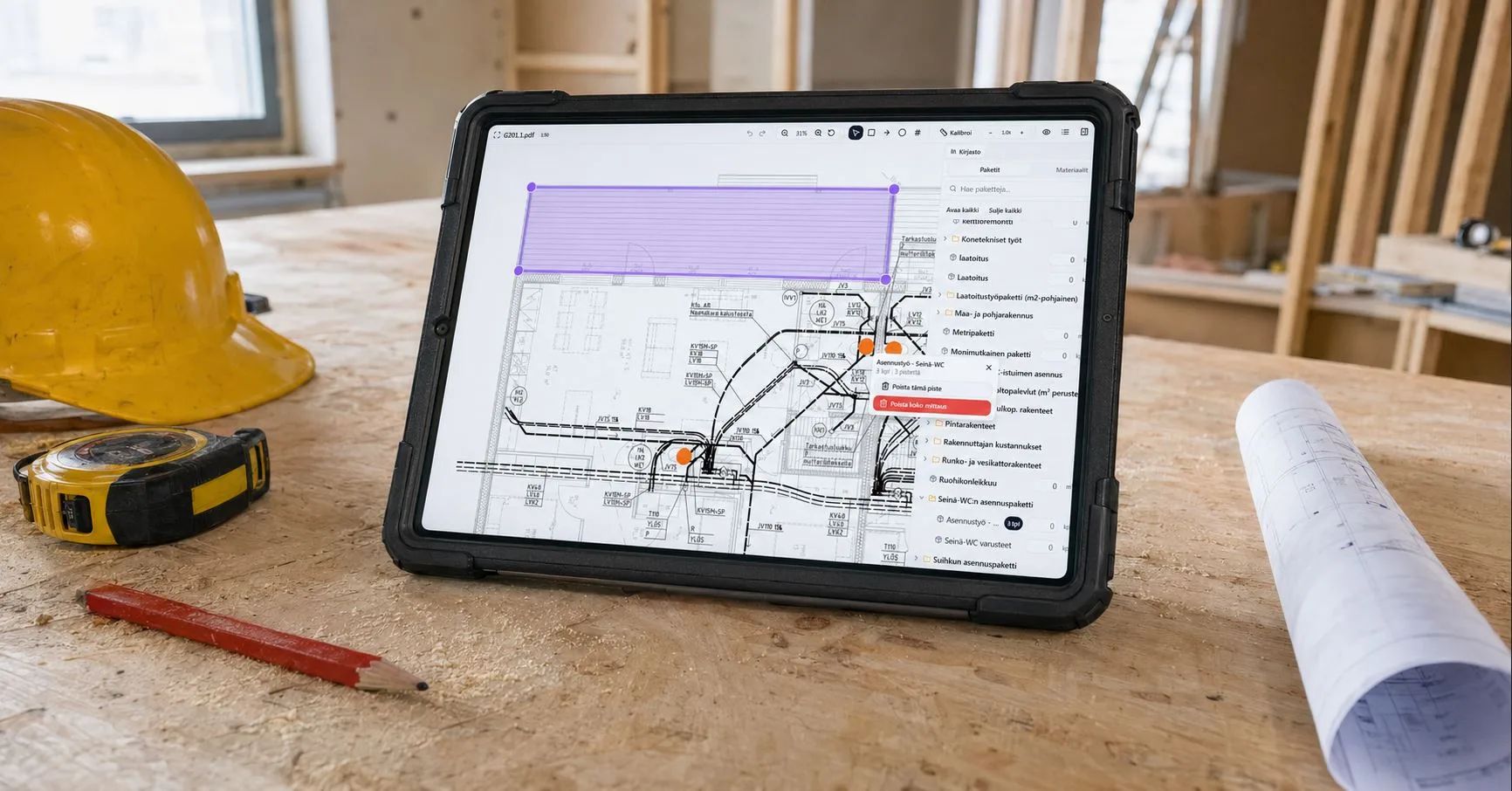
The difference between contract calculation and cost estimation
The terms often get mixed up:
- Cost estimation means determining the price of the quote that goes to the customer.
- Contract calculation covers the whole project's cost structure, budgeting and cost tracking over the project's lifecycle.
Contract calculation therefore starts from the quote but continues throughout the project: realised costs are compared with calculated ones, and the learning carries over to the next quote.
Line-item calculation: why it is worth it
Line-item coding means dividing costs by work phase according to standardised codes, for example the Talo 80 classification or the company's own line-item structure. Line-item calculation enables:
- Tracking profitability by work phase. You see which work phase kept the margin and which ate it, for example the foundations compared with the facade.
- A learning calculation template. When you know that the real number of hours for element installation is 15% higher than calculated, the next quote is more realistic.
- Comparing subcontractors. You compare the same line item's costs across different projects and from different suppliers.
Without line-item coding cost tracking tells only the project's overall result but not where the margin was made or lost.
A good calculation template: what does it include?
An effective calculation template covers all cost elements:
- Labour: hourly rates by work phase and site-management add-ons
- Materials: item, consumption, waste percentage and price
- Subcontracting: unit price or an hourly-based estimate
- Equipment: usage time and cost per project
- Indirect costs: site cabins, waste management, transport and insurance
Missing cost elements are the most common cause of a cost-estimation mistake. They do not disappear from under the tender price anywhere, but are left for the entrepreneur to pay.