
Introduction
The accident frequency in construction is still among the highest in Finland. The TR measurement has been shown in practice to be the single most effective tool for lowering it. Yet in many small construction companies the measurement is done irregularly or on paper, from which the data goes nowhere.
In this article we go through how the TR measurement works, why it is worth doing electronically and how it supports the company's quality management more broadly.
What is the TR measurement and why is it mandatory?
The TR measurement (the building construction safety index) is a standardised method for numerically assessing a site's safety level. In the measurement the site is walked around and observations are classified as either correct or incorrect in six areas:
- Working
- Scaffolding, walkways and ladders
- Machines and equipment
- Fall protection
- Electricity and lighting
- Order and waste management
The TR index is calculated with the formula (correct observations / all observations) × 100. A good level is over 90%.
The law does not require the TR measurement by name, but the construction work safety decree requires weekly safety monitoring. The TR measurement is the most widely used way to meet this obligation.
Electronic TR measurement or paper: what is the difference?
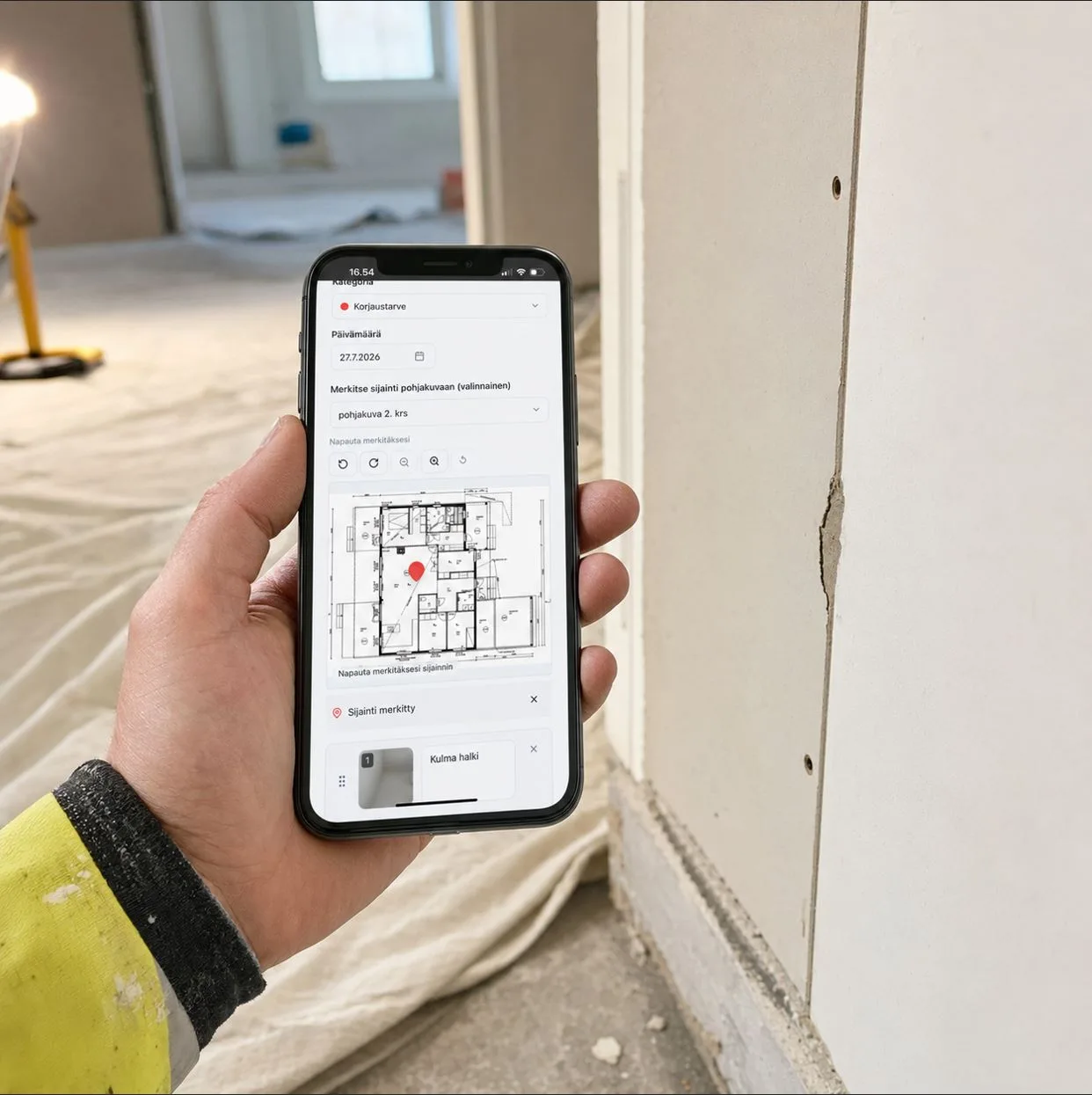
A measurement done on a paper form ends up in a folder. An electronic measurement automatically produces material that paper does not give:
- A history trend. You see the index develop from week to week.
- Visual observations. A deviation is documented with a photo right at the location.
- Assignments. A corrective task is assigned to a responsible person and a deadline is set for it.
- Sharing. The report goes by email to the client or supervisor immediately.
An electronic system also guides the person measuring. It reminds them which areas need to be covered and prevents finishing the measurement before all points have been handled.